Science Art and Ceramics by B. Duygu Özpolat
Infesting the cabinets with worms, bugs, and all things squirming, this show dares us to get curious and find beauty in what repels, and to love nature not despite its strangeness, but because of it.
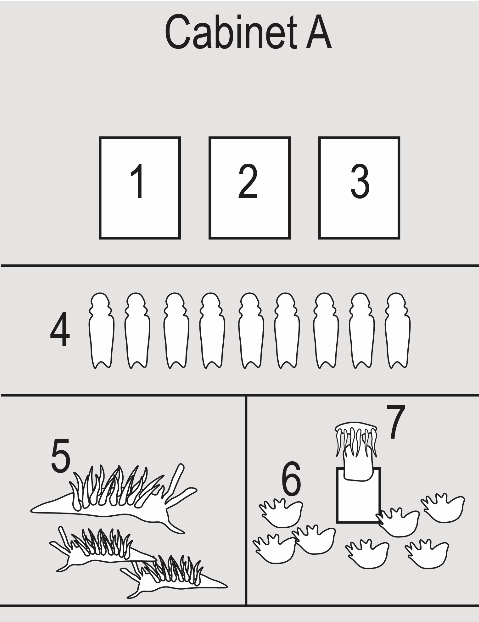


A1 – The Neural Crest (print)
The neural crest is a specialized group of temporary cells in a developing embryo that acts like a biological "construction crew," traveling throughout the body to build various structures. These versatile cells are responsible for forming everything from the bones in your face and the pigment in your skin to parts of your nervous system and heart.
More info about the neural crest and components of this drawing here.
A2 – Embryology (print)
This drawing depicts many organisms and organ systems that are studied in research to understand how multicellular organisms develop from a single fertilized egg, and how they grow and regenerate once the adult is formed. There are sea star and sea urchin larvae, several types of worms, frog tadpoles, insect ovaries among other things in this drawing.
More info about this drawing here.
A3 – Plant Ovaries (print)
This drawing was inspired by a visit to the Natural History Museum in Harvard University in 2013. There I saw the glass flowers and plants created by Leopold and Rudolf Blaschka, an amazing collection you must see if you are in Boston. This collection planted the seeds (pun intended!) that later resulted in my ceramics animals.
More info about this drawing and its components here.
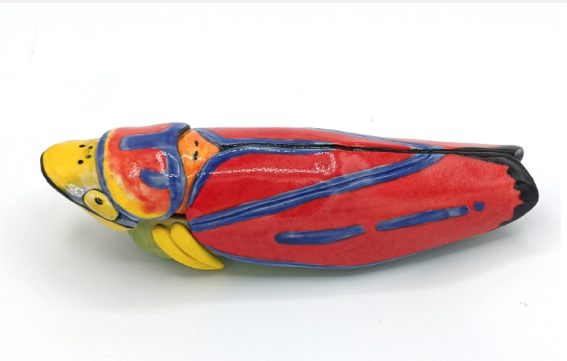
Candy-striped leaf hopper (handbuilt ceramics)
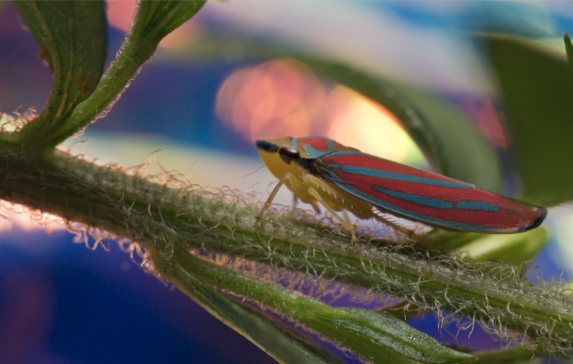
Photo of the actual animal found on Cape Cod, MA.
Taken by Ryan Null, with Duygu’s assistance
A4 – Candy-striped leafhopper swarm (11 bugs, slip-cast ceramics)
Meet the candy-striped leaf hopper. On the top right is the original ceramics piece I made, but I ultimately wanted to have a swarm of these hoppers, as you see in this exhibition. The slip-cast swarm present many colors, while the real animal (photographed in the middle right) does not really live in swarms and it typically comes in the colors seen in the photograph. These little hoppers are actually quite widespread in North America, you do not need to go to an exotic place to find them. They are quite small, so they often go unnoticed but on a warm summer day, you may spot them in your backyard.
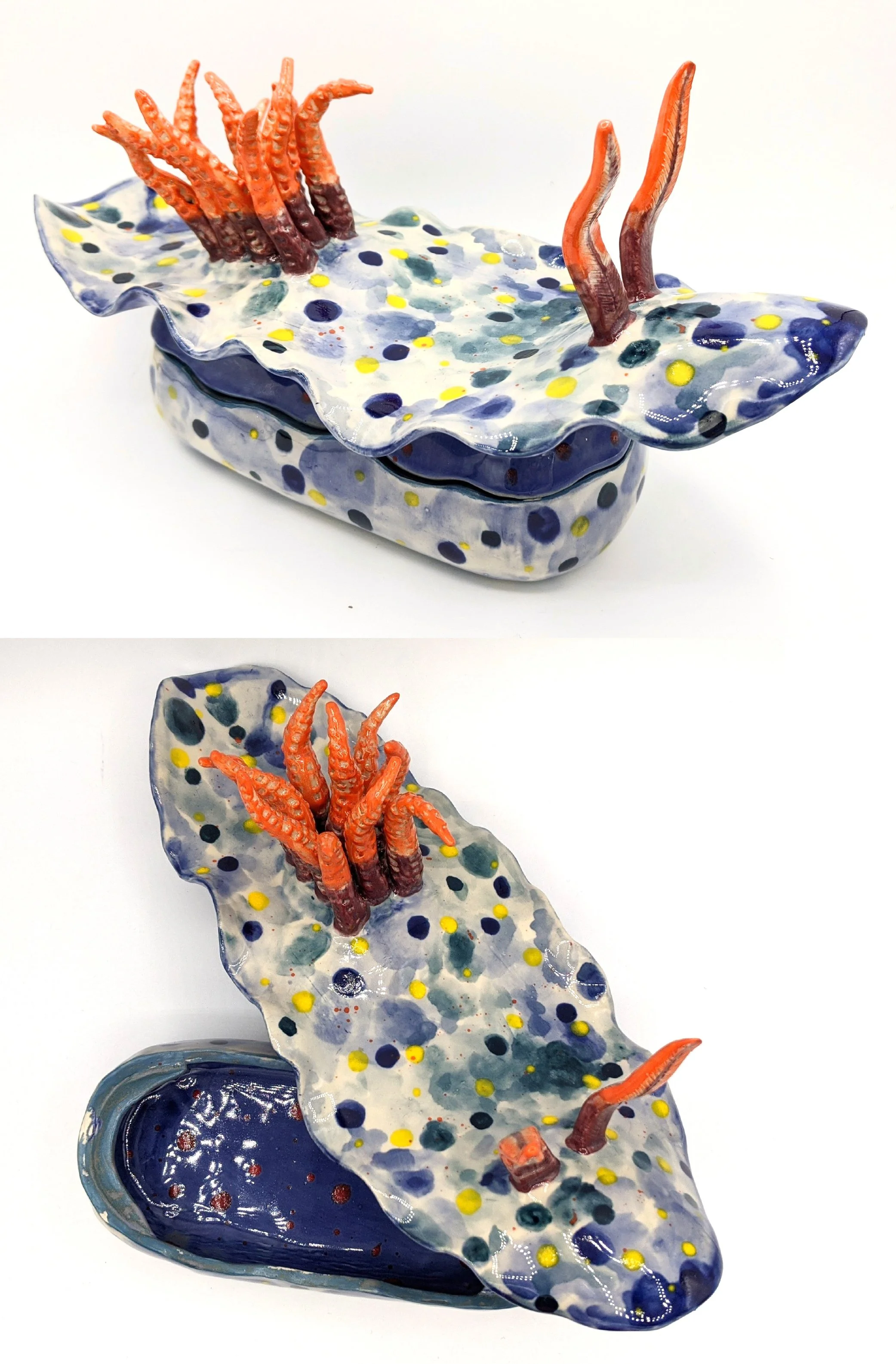
A5 – Nudibranch gathering (5 pieces, handbuilt ceramics)
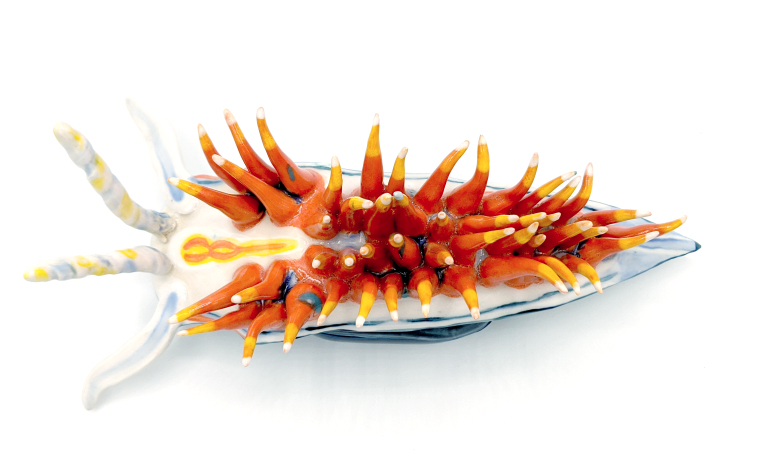
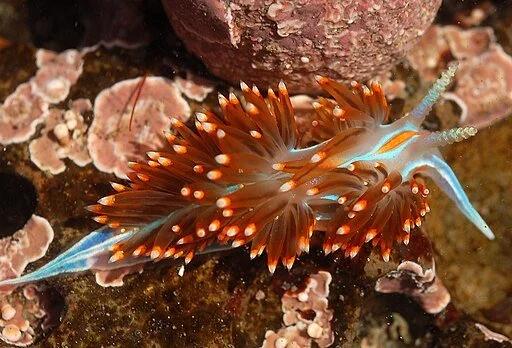
Nudibranchs are sea slugs, which are basically snails with no shells. Instead they fashion amazing shapes and colors. Do not touch them, they may sting because some steal stinging cells from jellyfish!
A5 – Nudibranch gathering detail: Hermissenda crassicornis
Top: Ceramics by Özpolat
Bottom: Hermissenda crassicornis, reference photo of the actual animal (from Wikimedia)
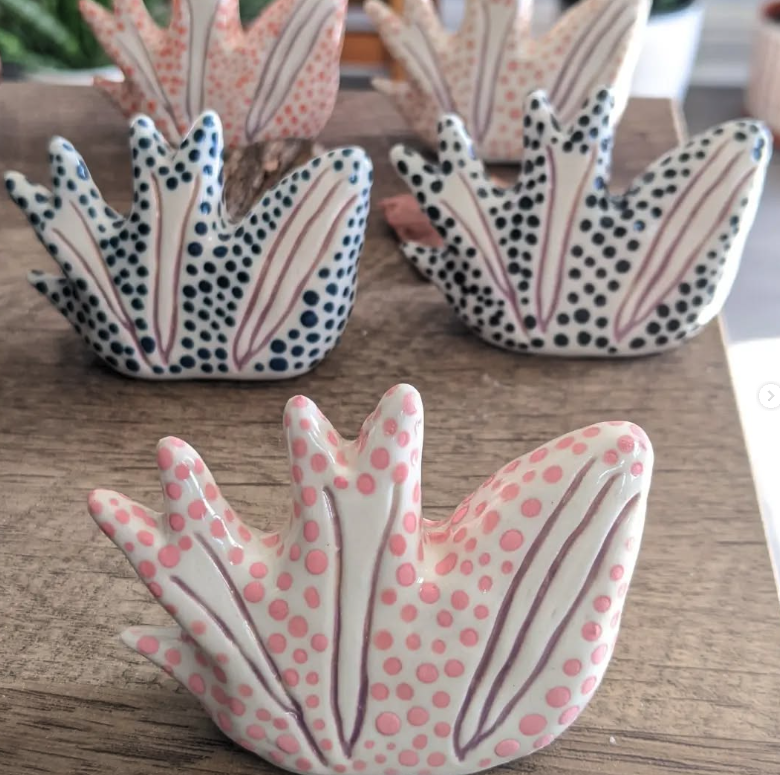
Parapodia garden (multiple pieces, slip-cast ceramics)
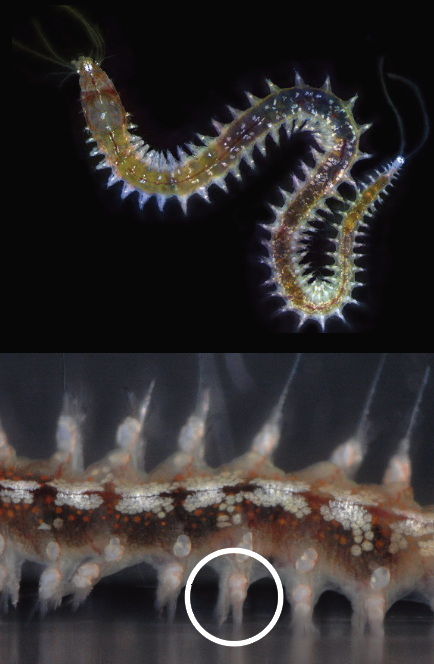
Top: Photo of Platynereis dumerilii by Rannyele Pasos Ribeiro
Bottom: Close up of Platynereis dumerilii by Ryan Null
A6 – Parapodia garden (multiple pieces, slip-cast ceramics)
These pieces are inspired by our favorite worm’s little legs (scientists call them parapodia). The white circle in the photo on the top right highlights one of these little legs. Worms use these legs for many purposes, such as locomotion, sensing their environment, and building a tube to live in.
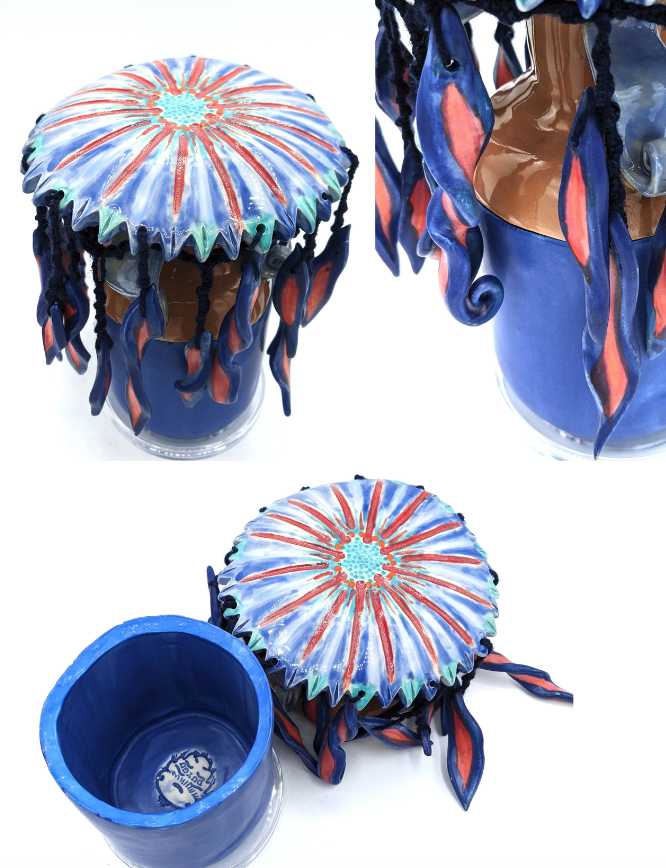
Jelly fish (handbuilt ceramics with macrame)
A7 – Jelly fish (handbuilt ceramics with macrame)
Jellyfish are fascinating sea creatures made almost entirely of water, lacking a brain, heart, or bones to keep them moving. Instead they have a neural network. They use specialized, spring-loaded stinging cells called nematocysts that act like tiny, toxic harpoons to paralyze their prey in a fraction of a second. This is what also would hurt you if you touch a jellyfish, although not all jellyfish are venomous, and even with venomous jellyfish, not all parts of the animal have these stinging cells. As mentioned above, sea slugs steal these cells from jellyfish to use them as their own weapons!
Jellyfish are also among some of the best animals that can regenerate. An entire jellyfish can grow from a tiny fragment of the animal, or even a cluster of cells.
For a video of this piece check out this Instagram post.
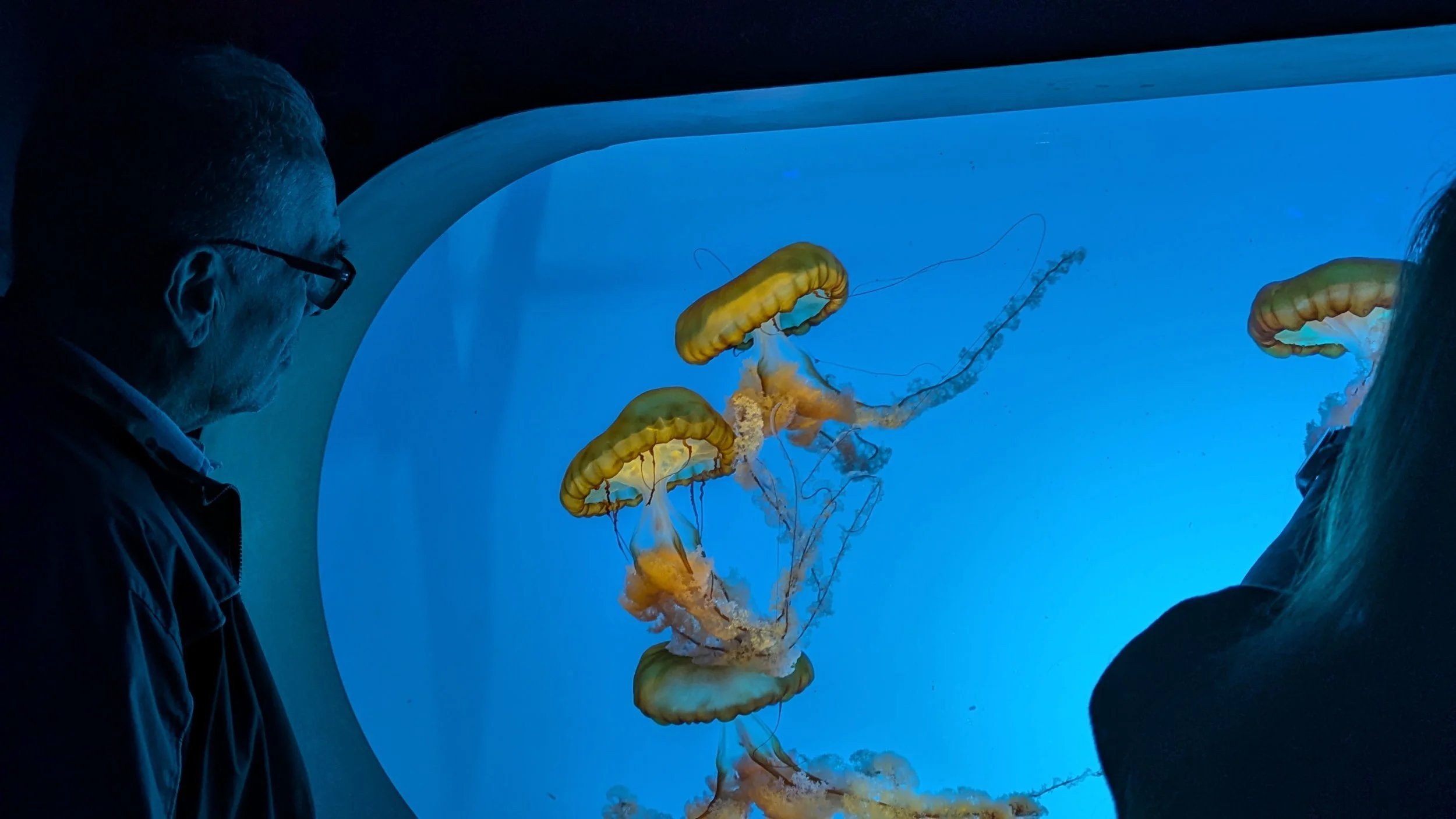
Jellyfish at the Saint Louis Aquarium
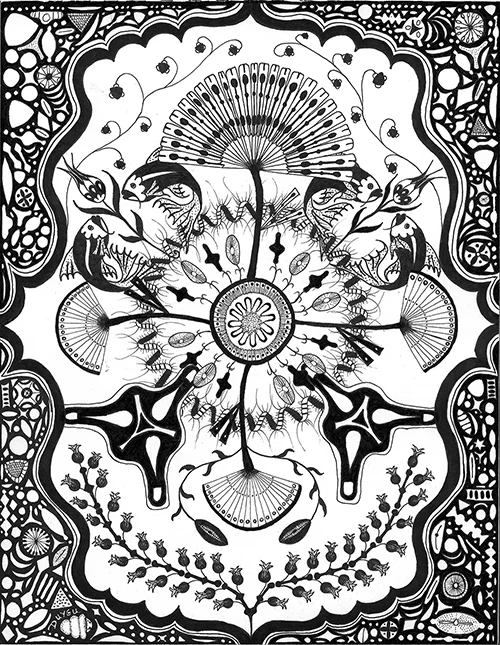

B1 – Diatoms İznik style (small print)
Diatoms are single-celled organisms (they are algae). The wonderful shapes they come in is due to their cell wall made of silica. Sometimes diatoms form colonies too (like Chaetoceros and Licmophora in this drawing). This drawing is made in the underglaze ceramic painting style from Turkey, mostly encountered in İznik and Kütahya ceramics.
More info about this drawing and its diatom components can be found here.
B4 – Developing Models (small print)
This drawing highlights some of the animals we study in developmental biology research. In the middle are bat embryos (can you spot their developing wings?). Also in this drawing are chicken, insect, and sea quirt embryos, crustacean, insect, and frog larvae.
Researching how an embryo grows allows scientists to understand the "instruction manual" for life, helping us figure out why certain birth defects occur and how to prevent them. We map the incredible journey from a single fertilized egg to a complex organism, revealing how cells "know" exactly when to become a heart, a brain, or a limb.
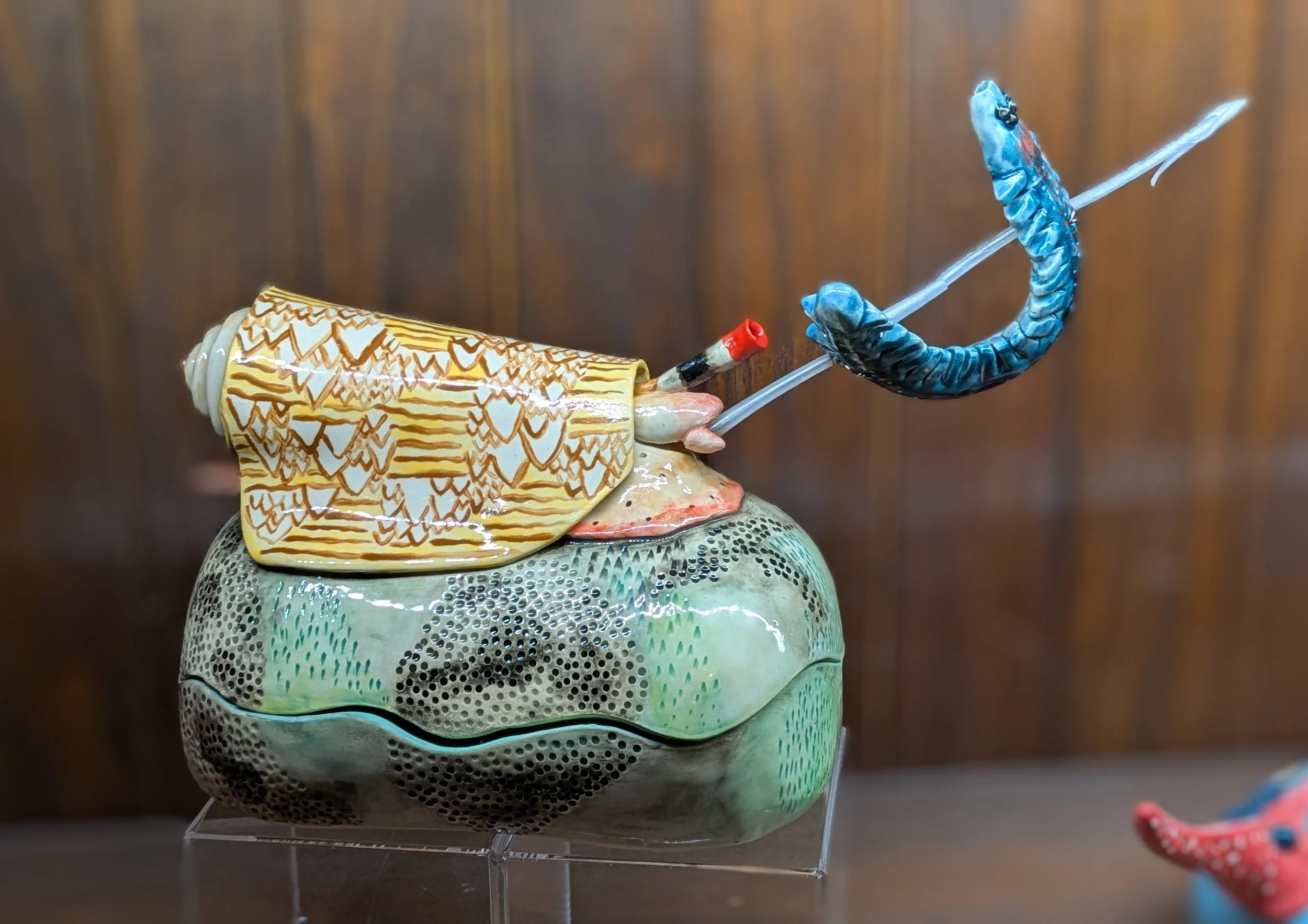
Cone snail hunting a polychaete worm (handbuilt ceramics, plastic and wire)
B5 – Cone snail hunting a polychaete worm (handbuilt ceramics, plastic and wire)
Cone snails are extremely venomous animals, and they hunt their prey in very clever ways. This piece represents a snail hunting a worm and this scene is inspired by a research study my lab participated in: Our collaborators isolated substances from the cone snails, and predicted that these substances were similar to mating signals our worms release, to attract each other. Indeed, when we tested these on our worms, they behaved like as if there is a mate nearby. We think that in the wild, the “clever” snail mimics the worm mating signals, fooling the worms to think there is another worm nearby. When the worm gets closer, the snail shoots its harpoon and catches the worm! Oh yes, they have a harpoon too.
Ologies podcast has interviewed my collaborators in this episode. Give it a listen!
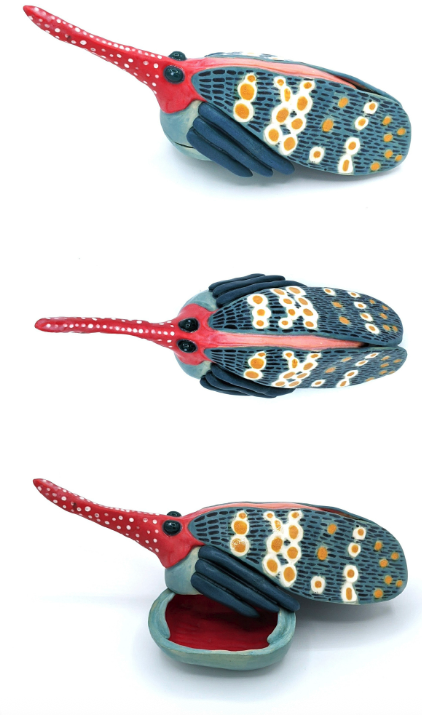
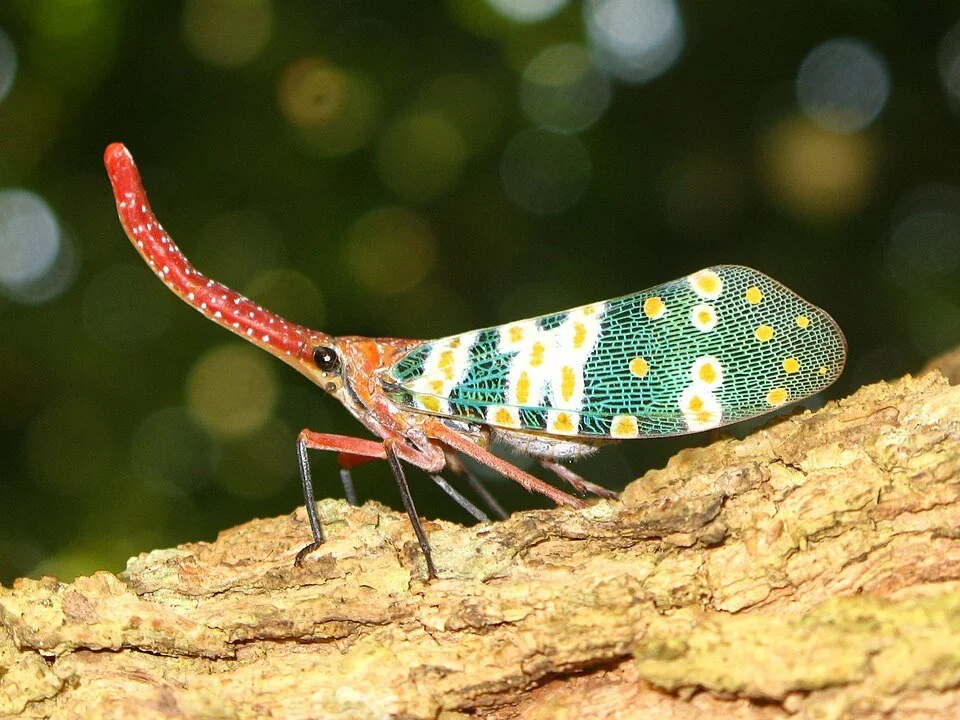
B6 – Spotted lanternfly (handbuilt ceramics)
This is Pyrops candelaria from the Fulgoridae family of insects. I used the photo by Richard Ling above as the reference for building this cutie.
Insects are so abundant and diverse, they never cease to surprise me with their forms, colors, behaviors, and in this particular case, dorky snouts.
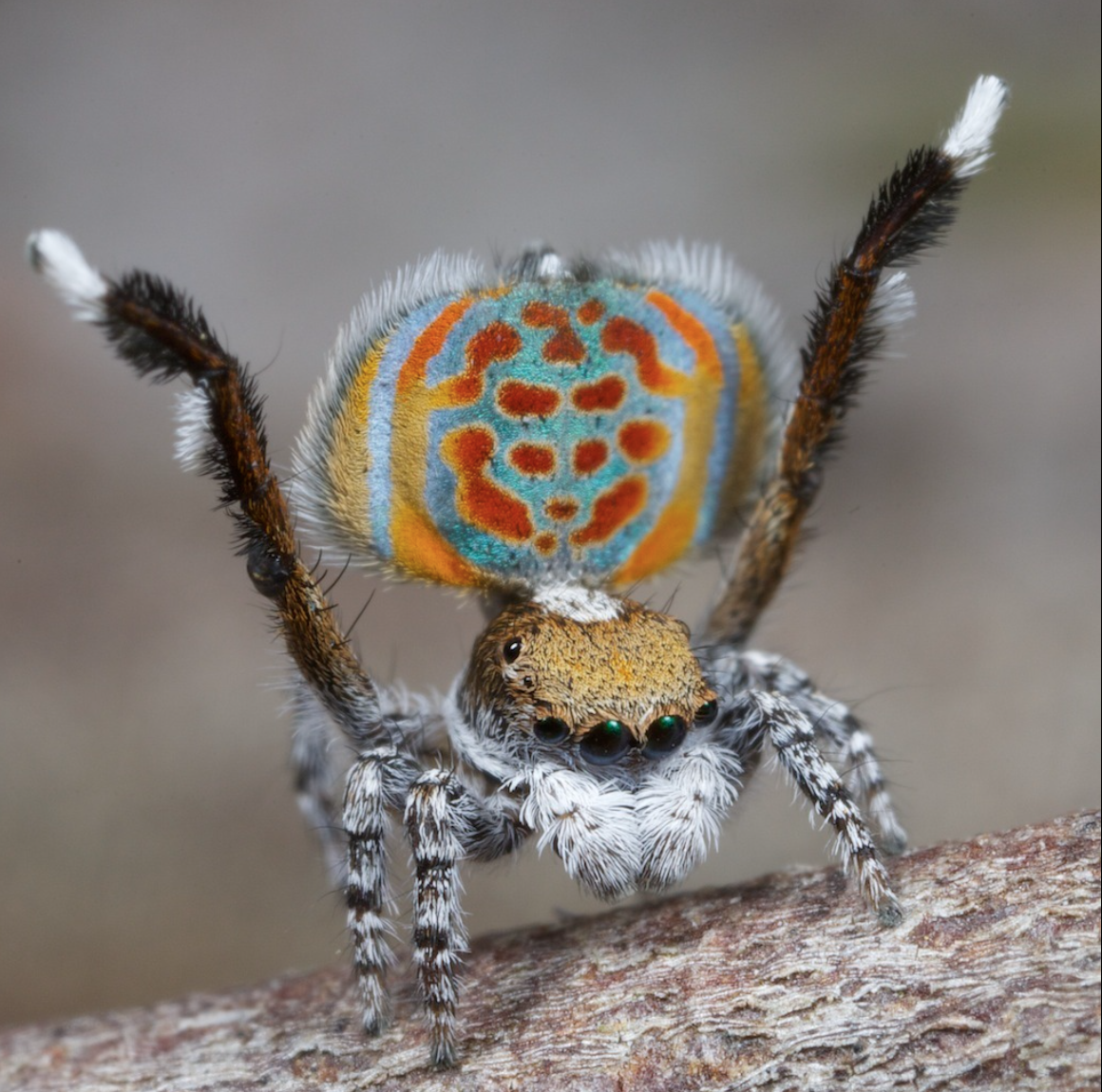
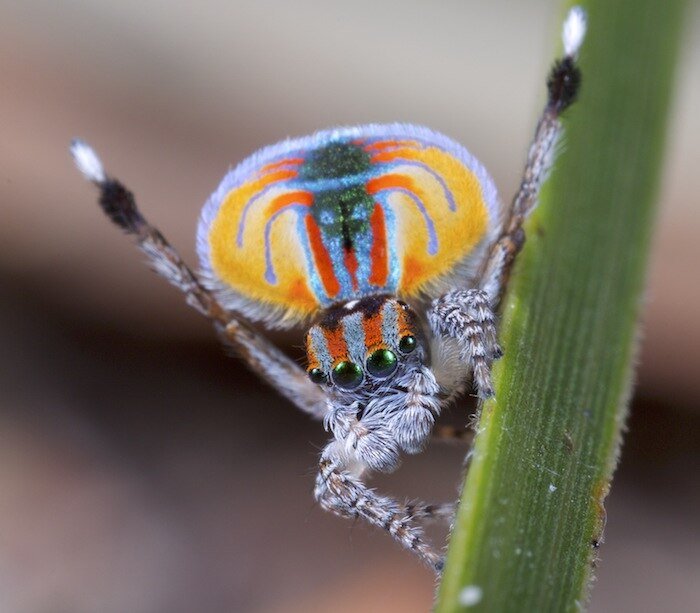
both photos by Jurgen Otto
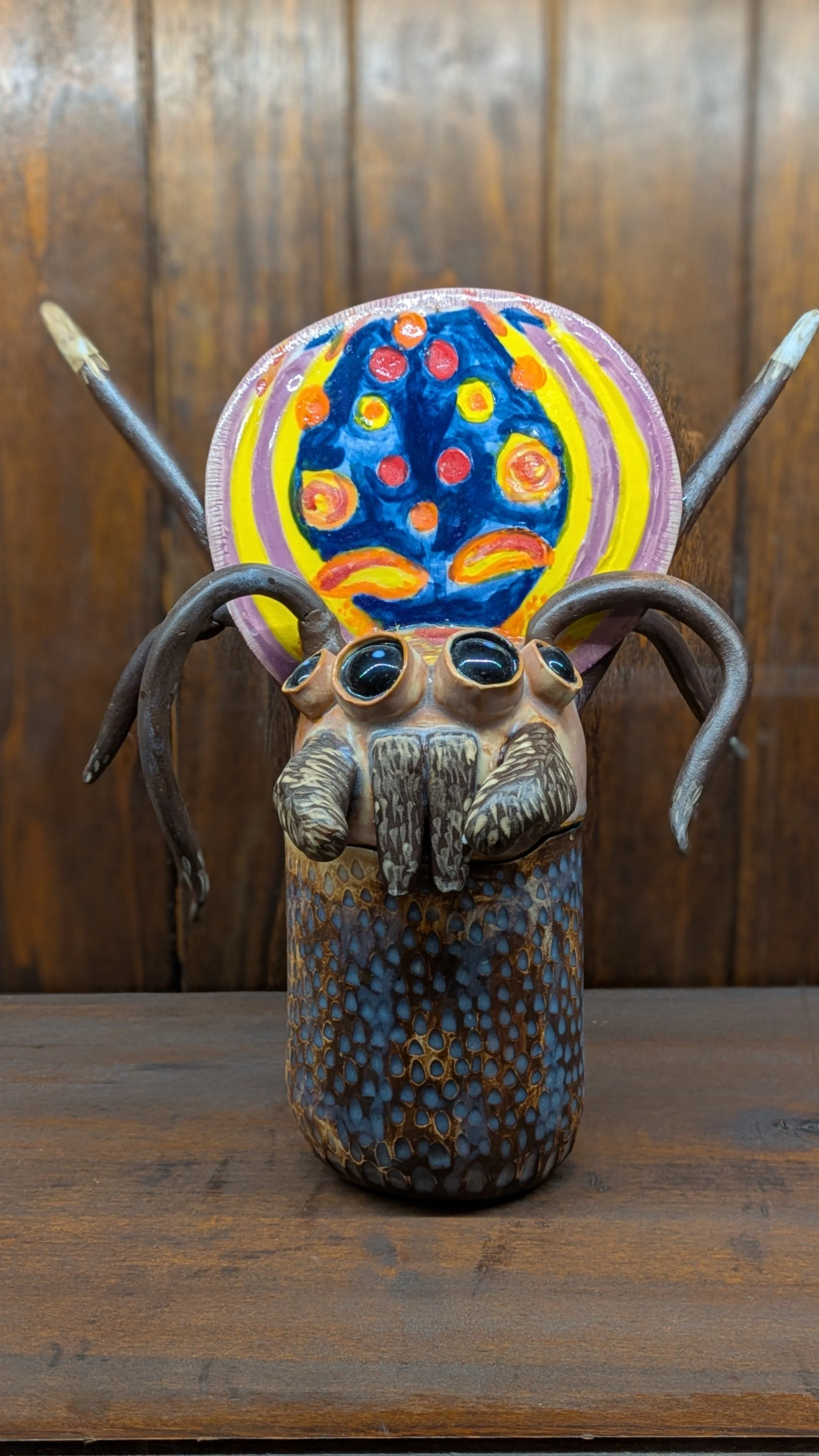
B7 – Peacock spider (handbuilt ceramics)
One of the cutest, most colorful, dorkiest, silliest, AND smallest of spiders! Peacock spiders are a type of jumping spiders, and they are almost exclusively found in Australia. Their tiny bodies can be mostly around 4–5 mm (0.2 in) in length. They have sexual dimorphism, meaning males and females look different from each other, with the males being colorful and having the dance moves. If you haven’t seen a peacock spider dance before, you MUST watch this video.
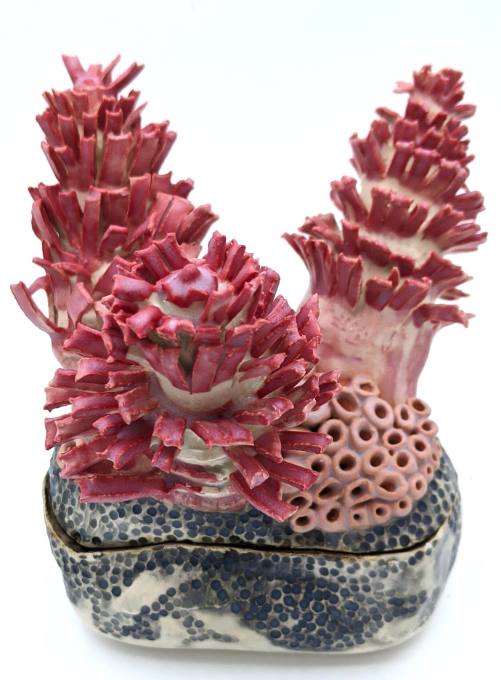
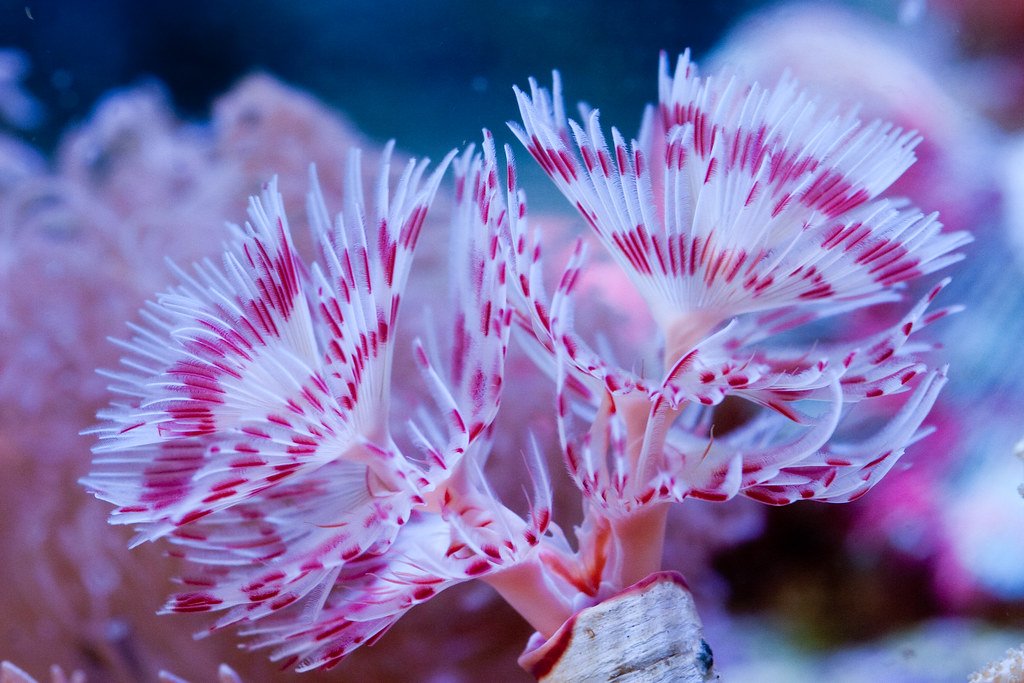
Buster Frith, Protula bispiralis
B8 – Christmas tree worm (handbuilt ceramics, paperclay)
It is hard to believe that the form you see above is inspired by a segmented worm. Most people think worms are disgusting, but a bunch of us scientists are obsessed with these animals. We like them, we think they are ugly-cute, and some of them - like the Christmas tree worm - are actually cute. There are more than 20,000 species of segmented worms. They live everywhere, from the dark depths of the oceans to your worm compost bins. They have adapted to living near hydrothermal vents, or within sponges. Some hitch a ride with sea stars. Many of them can regrow entire new worms from small fragments of their bodies - regeneration! They are amazing and there is still so much we do not know about these animals. A video of this ceramics piece is here, and more info about the animal here.
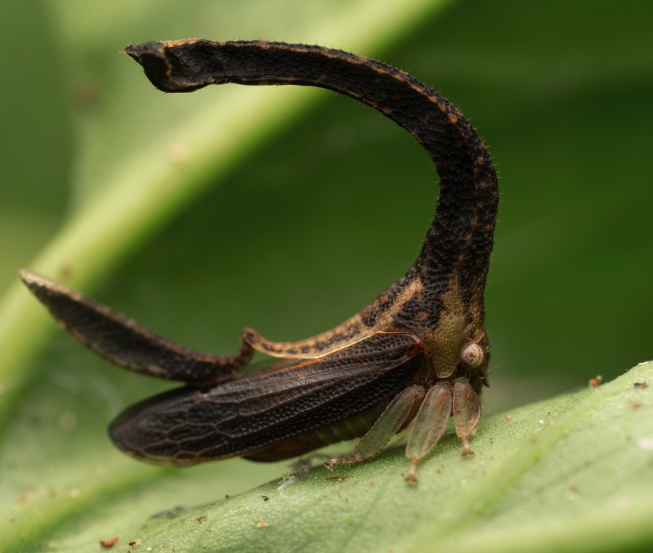
Reference photo Kyle Scholz
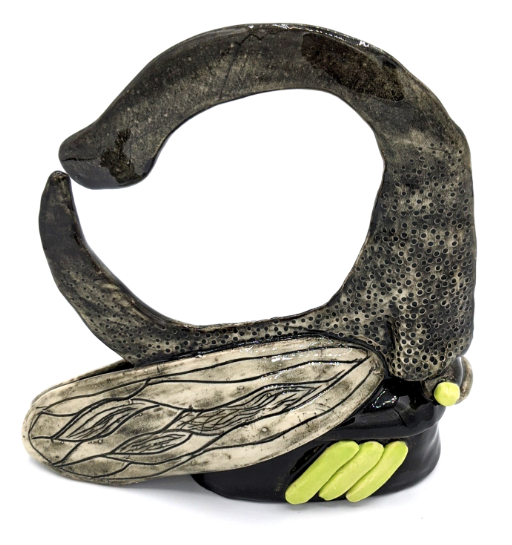
B9 – Black membracid (handbuilt ceramics)
Membracids, commonly known as treehoppers, are the tiny architectural wonders of the insect world, famous for the bizarre and elaborate "helmets" they wear on their backs. Beyond their looks, these insects act like miniature vampires of the plant world, using needle-like mouths to drink sap while communicating with each other through vibrations sent directly through the stems of plants. I cannot recommend enough making a search online and checking out all the other wild shapes these insects evolved. Here is a video of this ceramics piece.
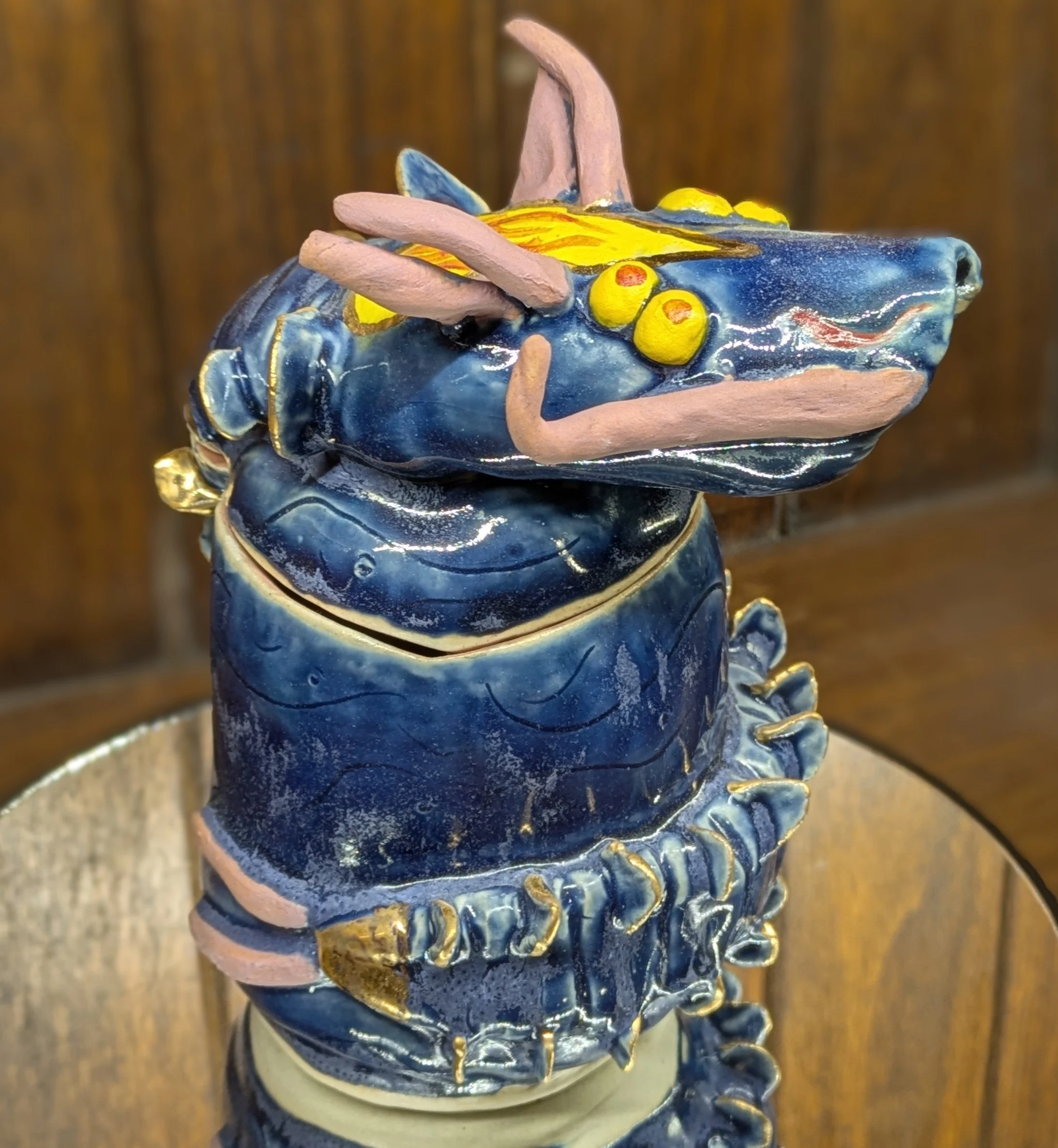
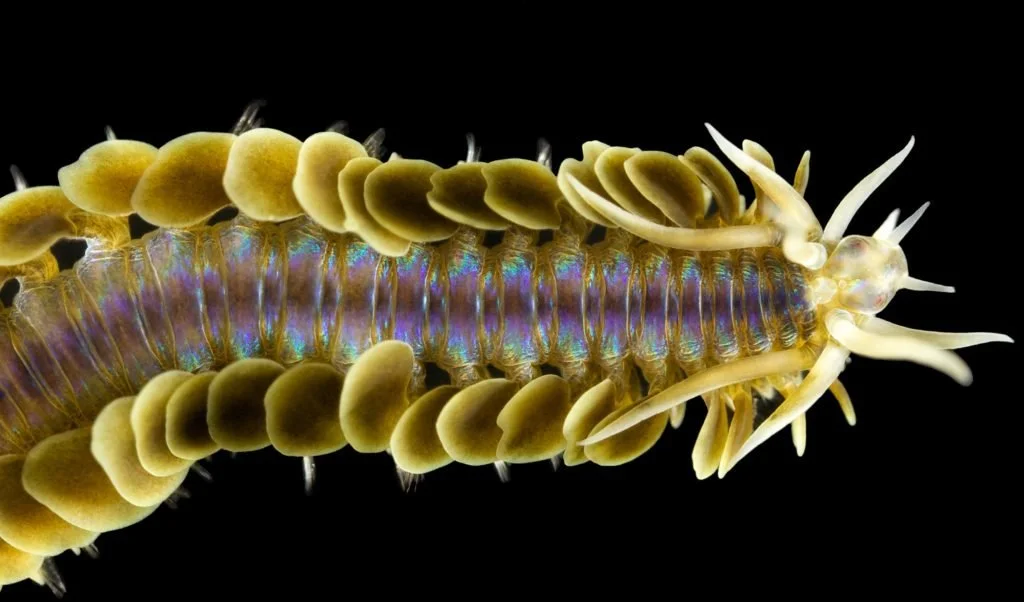
Phyllodoce citrina, Photo by Arne Nygren
B10 – Phyllodocid worm (handbuilt ceramics, gold luster)
This little dragon is actually a segmented worm (annelid), and it is one of my favorite worms (but I must admit, I have like 1000 favorite worms and counting).
Reference photo by Isaac Fox.
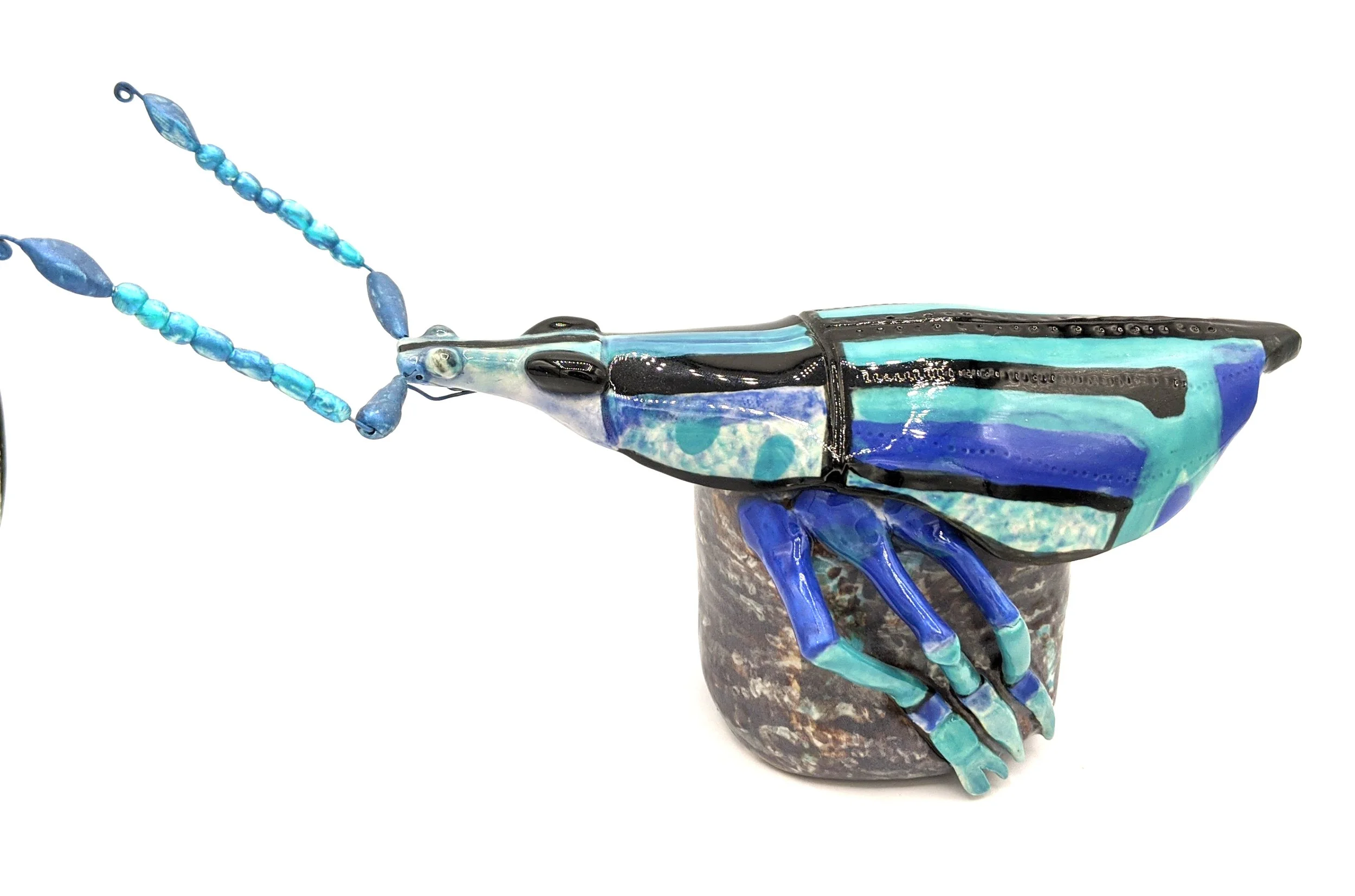
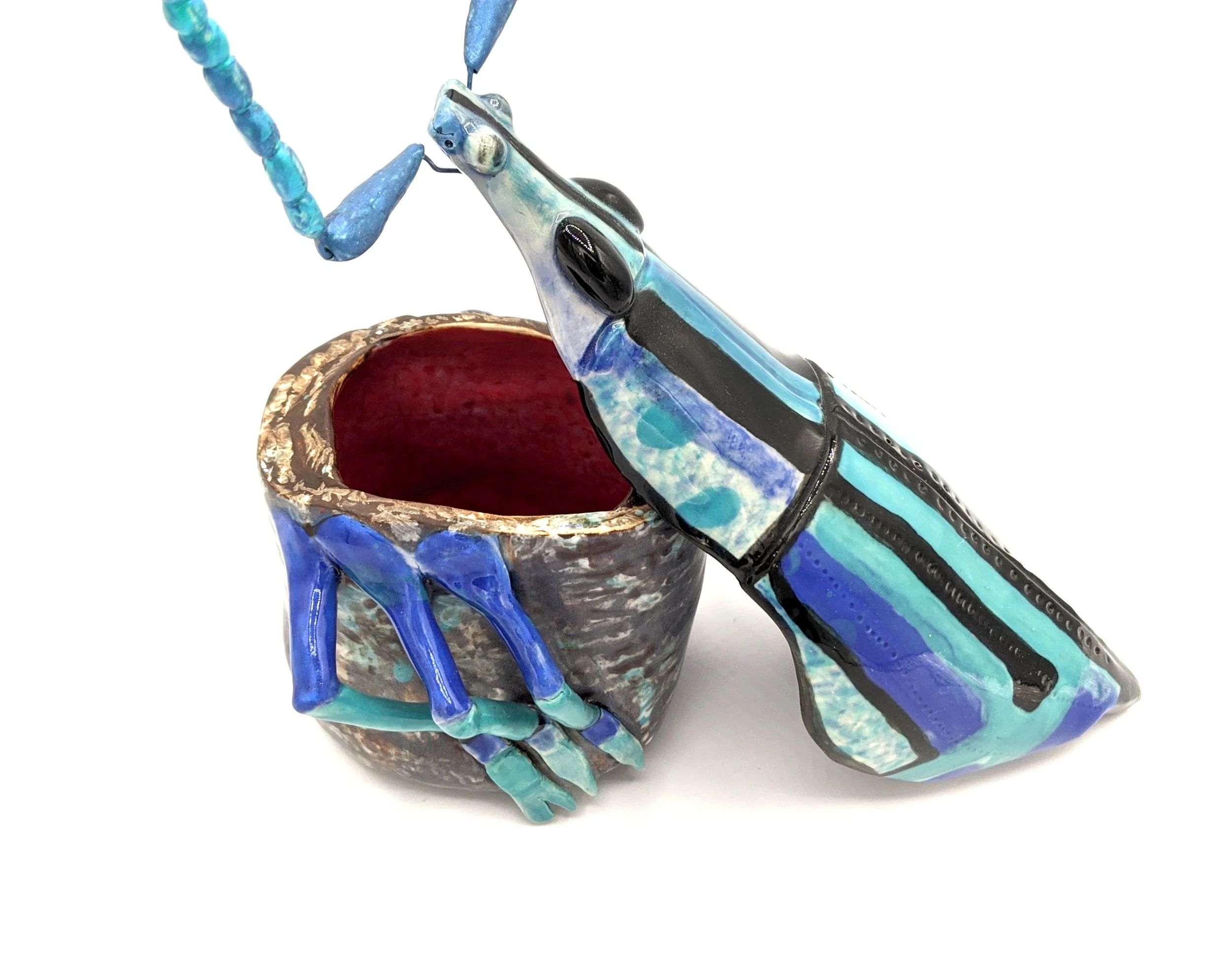
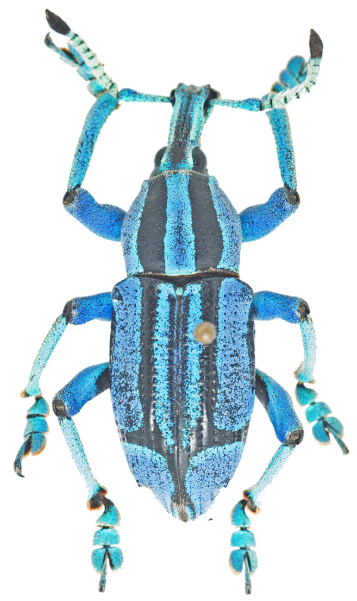
B11 – Blue weevil (handbuilt ceramics, wire, polymer clay)
Blue weevil beetle, Eupholus bennetti. Almost entirely made of clay except I had to add the antennae after the body was made. The antennae are made of wire and polymer clay painted with acrylic.
Reference photo by Matthew Cicanese
B12 – Blue membracid (handbuilt ceramics)
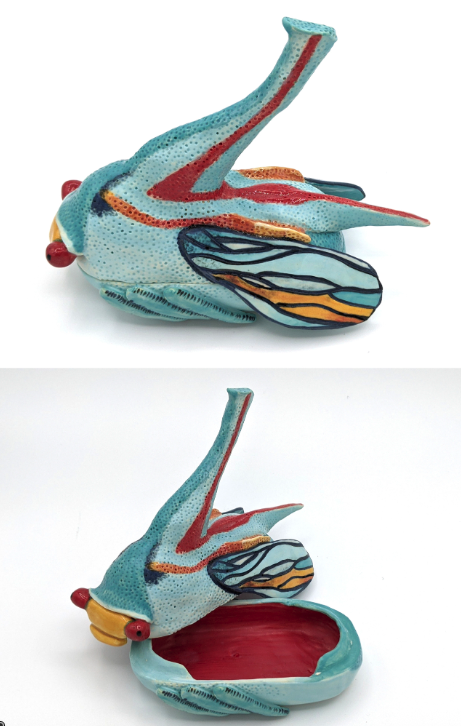
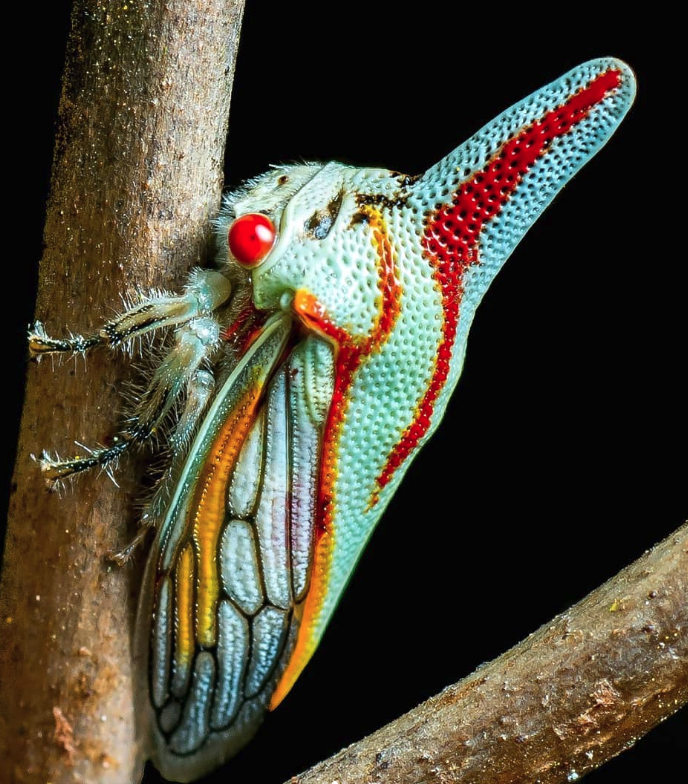
Another membracid! Perhaps you can tell from this one’s face, membracids are close relatives of cicadas, but if cicadas had drag queen cousins, or the Burning Man going friends, that would be membracids I suppose. The piece you see in the curiosity cabinet is a new version of this one above. Unlike this original piece, the piece on display is slip cast. It has been a fun and technical challenge to figure out how to slip cast these elaborate pieces. (Thank you Mary Rhein!)
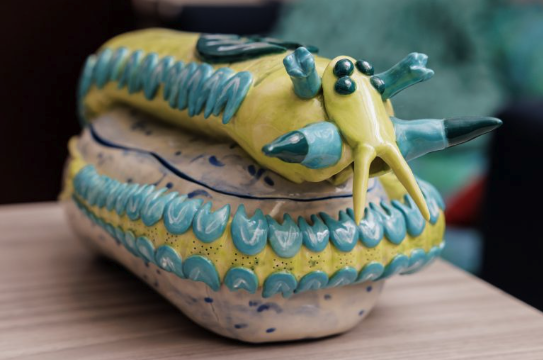
Photo credit: Whitney Curtis

Nereids in Greek Mythology (painting by Karl von Blaas)
B13 – Nereidid worm (handbuilt ceramics)
In Greek mythology, Nereids were the 50 daughters of Nereus, the old man of the sea. They symbolized the beauty and kindness of the seas and were often referred to as goddesses of sea or sandy beaches. Some millennia later, another group of sisters would be named after Nereids by scientists: the family of Annelids known as the Nereididae. Among the ranks of Nereididae, Platynereis dumerilii (first described by Audouin & Milne Edwards) is the most famous species of the genus Platynereis. While the worm Platynereis dumerilii and its sisters may not be widely appreciated for their beauty as the original Nereids, these impressive worms quickly become the beloved lab companions of those who study them. Unlike the daughters of Nereus who lived in the Aegean Sea, today’s Nereids are all over the world, including many research labs like my lab at WashU. (This text, originally also penned by Duygu, was adapted from this article)
MANY THANKS TO:
My husband, partner in crime, and insect nerd Ryan Null
My lab members, past and present
All photographers who go find and documents these amazing creatures
Intersect Arts Center and staff (Kasper, Megan, Seth, my pottery studio community)
My teachers and guides in the art world: Betsy Johnson, Sarah Caruso, Mary Rhein, and my mom Nursel Arlı
NIH, NSF, WashU, and MBL for funding my research